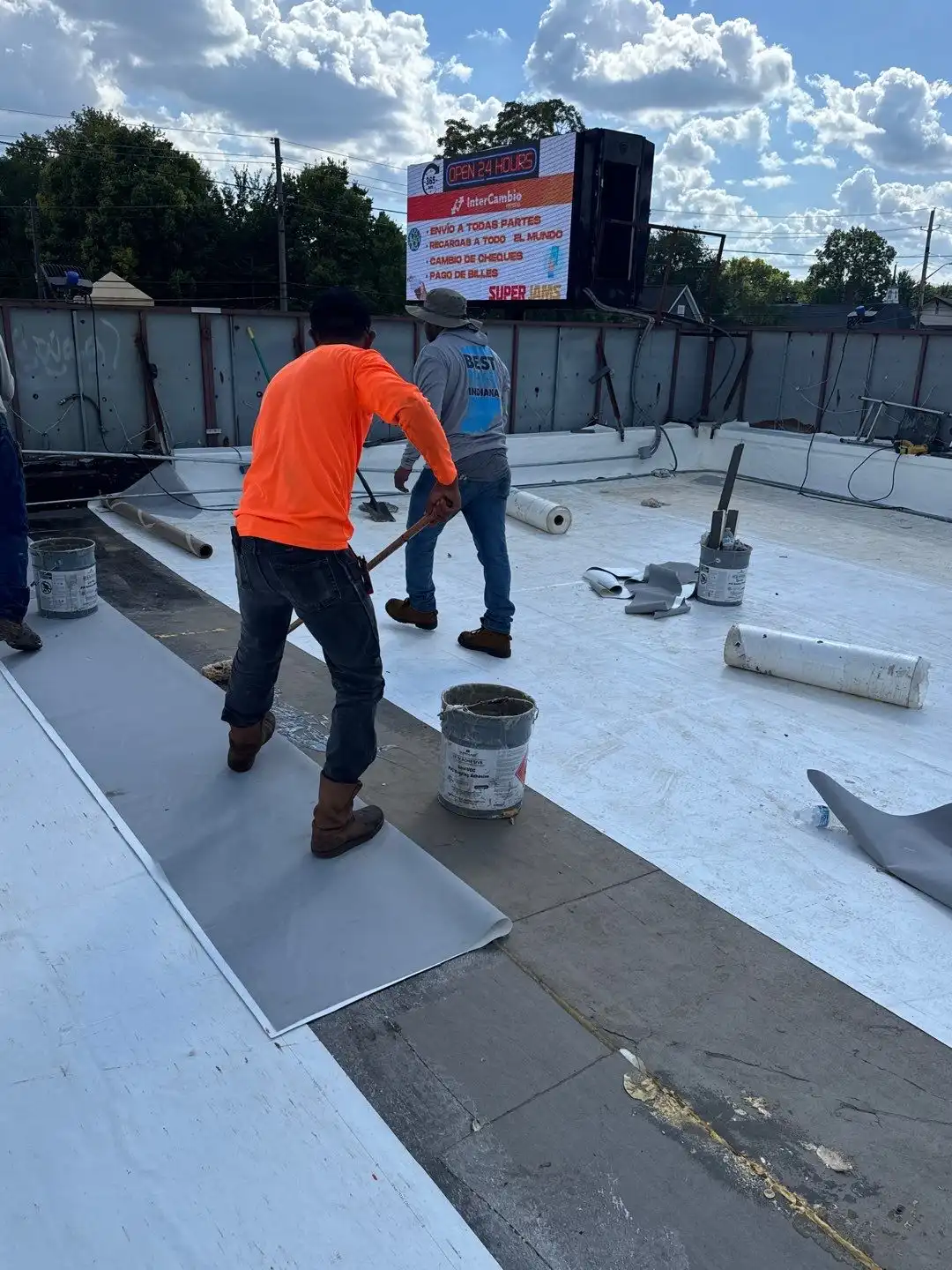
PVC Versus Other Single-Ply Systems
PVC is one of three major single ply membranes used on commercial buildings, alongside TPO and EPDM. Each has its place, and the right choice depends on your building and its conditions. Understanding how they compare helps you see where PVC justifies its cost and where another system might serve you better. Here is an honest comparison for a Crooked Creek building owner.
PVC and TPO Compared
PVC and TPO are both thermoplastic membranes with heat welded seams, and they share the reflective, energy conscious quality of a light colored roof. The main differences come down to chemical resistance and cost. PVC generally offers superior resistance to grease, oils, and chemicals, which makes it the stronger choice for restaurants and chemical exposed buildings. TPO often costs less, which appeals to budget conscious projects without those exposures. For a Crooked Creek building, the choice between them often hinges on whether the roof faces grease or chemicals. Where it does, PVC's resistance usually justifies its higher price. Where it does not, TPO may deliver comparable performance for less.
PVC and EPDM Compared
EPDM is a rubber membrane, quite different from thermoplastic PVC. EPDM is durable and has a long track record, often at a lower material cost, but its seams are typically sealed with adhesives or tape rather than welded, which can be a weaker point over time. EPDM is also commonly dark, absorbing heat rather than reflecting it, though reflective versions exist. PVC's welded seams and reflective surface give it advantages in leak resistance and energy performance. For a Crooked Creek building, EPDM can be a cost effective option in the right situation, but PVC's sealed seams and chemical resistance make it the better fit where those qualities matter for the building's conditions.
Where PVC Justifies Its Cost
PVC typically costs more than TPO or EPDM, so it is fair to ask when that premium is worth paying. The answer is when the building's conditions call for PVC's specific strengths, chemical and grease resistance, fire performance, and welded watertight seams. On a restaurant, a manufacturing plant, or a building with demanding drainage, those strengths prevent the premature failure and repeated repairs that a cheaper system would suffer, making PVC the better long term value. For a Crooked Creek building, paying more upfront for PVC pays off when it means a roof that lasts and stays sealed under conditions that would defeat alternatives. The premium is justified by the performance it buys.
Chemical Resistance as the Deciding Factor
For many buildings, chemical and grease resistance is the single factor that settles the decision. If your roof faces kitchen exhaust, industrial chemicals, or rooftop grease and oil, PVC is very likely the right choice regardless of its higher cost, because the alternatives will degrade under that exposure. No amount of upfront savings is worth a roof that fails early because it was the wrong material for the conditions. For a Crooked Creek building with these exposures, PVC is not so much a preference as the appropriate engineering answer. When chemical resistance is the priority, the comparison with other systems usually resolves clearly in favor of PVC, and that is exactly the situation it was built for.
Matching the System to the Building
The real lesson is that no single membrane is best for every building, the right choice depends on matching the system to the specific conditions. A budget warehouse without chemical exposure has different needs than a busy restaurant or a chemical plant. The building's use, its rooftop exposures, its drainage, and its energy goals all factor into the decision. For a Crooked Creek owner, the smart approach is choosing the system that fits the building rather than defaulting to whichever is cheapest or most familiar. A roof matched to its conditions performs and lasts, while a mismatched one disappoints, which is why this matching is worth getting right.
Getting an Honest Recommendation
Because the right choice is building specific, an honest recommendation from an experienced contractor is genuinely valuable. A contractor who installs all the major systems can assess your building objectively and recommend what truly fits, rather than steering you toward whatever they happen to sell. That objectivity protects you from ending up with the wrong roof. For a Crooked Creek building, Crooked Creek Commercial Roofing gives straight recommendations based on your conditions and needs, and we will tell you honestly when TPO or EPDM would serve you as well or better than PVC. Our goal is the right roof for your building, since that is what keeps clients coming back to us over the years.
The Right System for Your Conditions
Comparing PVC to TPO and EPDM shows that each has its place, with PVC justifying its higher cost where chemical resistance, fire performance, and welded seams matter most. The decision comes down to matching the system to your building. An honest assessment of your conditions points to the right choice, and that is what leads to a roof that lasts on a Crooked Creek building.
It also helps to think about a PVC roof in terms of its whole life rather than just its purchase price. The upfront cost of PVC is higher than some alternatives, but on a building with the right conditions, that investment buys a roof that resists the grease and chemicals that would destroy a cheaper system, reflects heat to lower cooling bills, and stays watertight for well past two decades. Spread across all those years and weighed against the repairs and early replacement a wrong choice would bring, PVC frequently proves the more economical option. For a Crooked Creek business, taking the long view leads to a better decision than focusing on the initial number alone, and it is the perspective Crooked Creek Commercial Roofing encourages.
Get an Objective Recommendation From Crooked Creek Commercial Roofing
Trying to decide between PVC and another single ply system? Call Crooked Creek Commercial Roofing at (765) 676-3491 for a free inspection and an honest recommendation. We install all the major systems, so we will tell you straight which one fits your Crooked Creek building best, not just which one to sell you.